Introduction
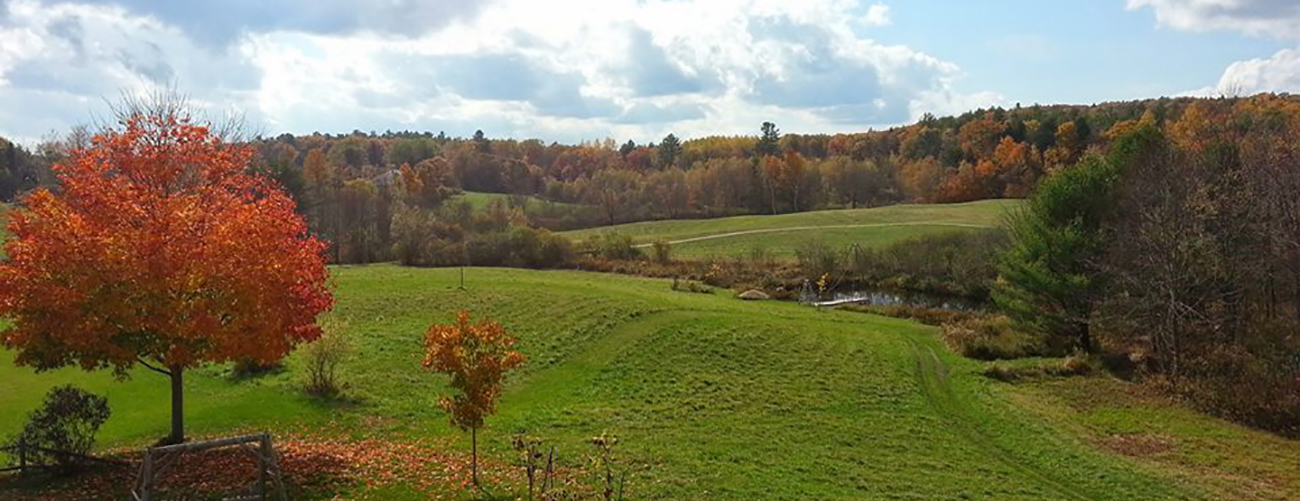
Scatter Good Farm in Brunswick, Maine, aims to be model for climate-friendly farming and forestry practices, and a great place for green bathing. The farm consists of a three-acre organic vegetable farming operation (run by Growing to Give, a grow-for-donation nonprofit), seven acres of old fields, and thirty acres of mixed forest. It also offers low-carbon rough-milled lumber, two Airbnb spaces, multiple outdoor gathering spaces, and one large indoor space for yoga, workshops and meetings.
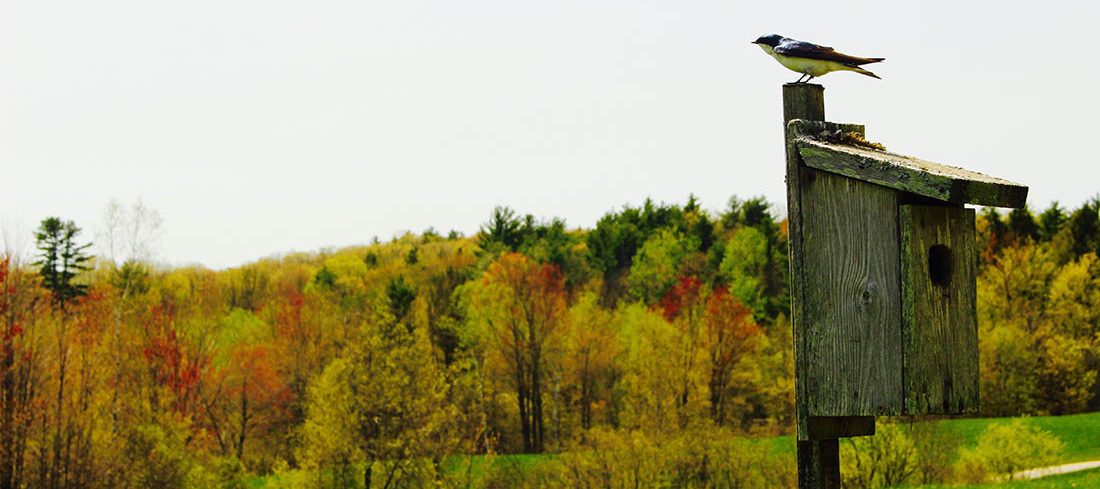
In addition to some nice people, the farm is graced by one cat, six goats, and lots of birds and other wildlife. The farm’s forested land is managed primarily for climate succession, wildlife, lumber and firewood, the fields are managed primarily for swallows and monarch butterflies, and the flower beds are managed for pollinators (and beauty). And many of the trees, shrubs, and flower beds are enriched with biochar that is produced on-site.
History and Land Acknowledgement
From the early 1900s to the 1980s, what is now Scatter Good Farm was part of the Two Echo Dairy Farm, and before that, the land was probably sheep pasture for many years (based on the rock walls in the woods). But from an even longer historical perspective, Scatter Good Farm sits within the historic lands of the Abenaki people, members of the Wabanaki Confederacy, who stewarded these lands for more than 16,000 years, and never ceded them. We acknowledge and honor their inherent sovereignty in these lands, and we continue to explore ways we can take action in support of this sovereignty.
Scatter Good Farm has been the home of the Carton-Newlin family (and a hub for community cohesion) since 2002, and we’ve greatly enjoyed sharing it with family, friends and neighbors a few times each year, often in conjunction with solstices and equinoxes or fundraising events, and often involving campfire music, yard games, and a variety of other outdoor festivities.
John retired in 2013 (after working in and with Maine schools for nearly 30 years) in order to focus more heavily on the climate change issue. In 2014 he completed the Permaculture Design Course and initiated efforts to make the farm more productive and climate-friendly by incorporating permaculture and agroforestry practices, and by making biochar on a farm-scale. In 2015, as near-empty-nesters wanting to stay on the farm a bit longer (but only while sharing it more and enabling it make more of a positive impact in the world), Patty and John officially named it Scatter Good Farm*. Theda Lyden, a retired executive chef and organic market gardener, and long-time friend of John and Patty, began working part-time at Scatter Good Farm as the farm manager in 2015. In 2016, the farm received organic certification from MOFGA, expanded its use of carbon-sequestering biochar, electric farm equipment, and other climate-friendly farming practices, and doubled its production of vegetables, which were being grown for a new line of organic tomato-based sauces Theda was creating.
However, in 2016 Theda also became aware, through her Master Gardener volunteer work, of the Merrymeeting Gleaners, a non-profit group that harvests excess farm and garden produce for donation to food banks and pantries. Then in August of 2016, Rebecca McConnaughey, a lead Merrymeeting Gleaner, came to Scatter Good Farm to pick up some excess peppers (that had already been harvested) so they could be taken to a local food bank. Theda, Patty, and John met Rebecca at the farm, and learned about Twin Villages Foodbank Farm, which was then about one year old. To put in mildly, they were drawn to the idea of making the final “destination” of Scatter Good Farm’s beautiful, organic, fresh vegetables be the shelves of local food pantries – instead of sauce jars. This led them to learn more about the food security programs in Maine and elsewhere, such as Veggies for All, and Mainers Feeding Mainers, but it was their meeting, in January 2017, with Sara Cawthon of Twin Villages Foodbank Farm, that convinced them to move ahead with their idea.
At that point, they figured they had just enough time to get launched for the 2017 growing season, so they promptly shut down the fledgling sauce business, and with the help of many others, they co-founded Growing to Give, a nonprofit organic grow-for-donation farming operation at the farm that would use climate-friendly farming practices to help address the issues of both climate change (now a major concern of nearly everyone) and food security (long a major concern of all three of them, and a career focus in John’s family for generations).
Also in 2017, Scatter Good Farm became the happy home of seven Nigerian Dwarf goats. They were briefly “goat yoga” superstars when they were very young, but they quickly settled into a more mature life, offering their valuable manure to the farm’s organic compost operation, and serving as a joyful diversion for Growing to Give volunteers, farm stay guests, and other visitors. As an aside, John finds their shared goat-ness, combined with their individual differences, to be highly instructive on many levels, and they seem to help him stay in reasonably good humor;).
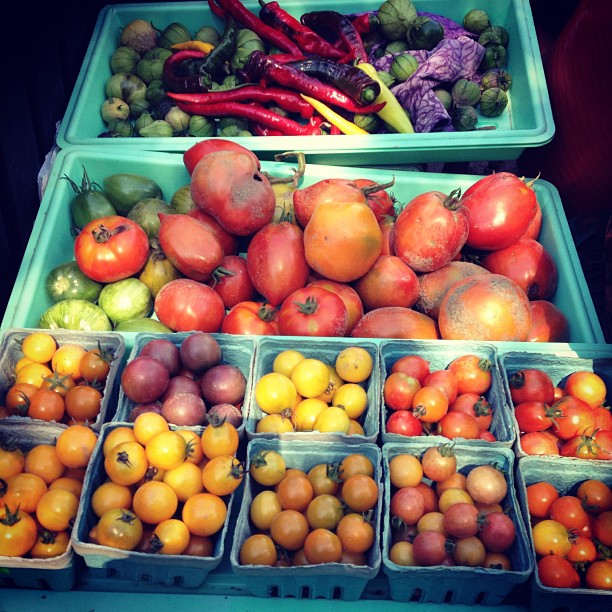
Vegetable production at the farm doubled again in 2017 (and was now exclusively for Growing to Give) thanks in great part to the help of the Merrymeeting Gleaners, which became Growing to Give’s primary harvesting and pantry delivery partner. In 2018, with the help of a huge increase in the hours donated by a wide range of volunteers and partners, Growing to Give was able to quadruple vegetable production over 2017, and then production in 2019 was almost as big as 2018. As a result, over its first three growing seasons, Growing to Give grew more than 35,000 lbs. of organic vegetables (on about a half-acre), and donated them to neighbors in need through over 20 local food access sites. At the same time, Growing to Give hosted some wonderful community-building fundraising events, expanded the use of biochar across all fields, and welcomed many hundreds of volunteers and visitors – who learned about food security, healthy food, biochar, electric farm equipment, and other climate-friendly farming practices.
Please visit the Growing to Give website, and see Growing to Give and Scatter Good Farm on Facebook.
Brunswick Biochar
Brunswick Biochar is a DBA of Scatter Good Farm that was established in 2015 to develop and promote efficient farm-scale agro-forestry biochar systems. Since then, John has designed and built biochar cookers that boil maple syrup and grill food, while producing small amounts of biochar as a by-product, and he has overseen the inoculation and application of this home-made biochar in grass-growing experiments conducted by college interns and others on the farm. In addition, while not really an activity of Brunswick Biochar, large amounts of biochar, from CharGrow and New England Biochar, have been applied at the farm each year since 2015, so at this point nearly all of Growing to Give’s vegetable plots have been enriched by commercial, MOFGA-approved biochar, as well as some of the flower beds elsewhere on the farm. In addition, a mix of commercial and home-made biochar is used in tree and bush transplanting throughout the farm. FMI about biochar, please see the section titled, “Biochar Resources”, on the SGF website, and check out this Guardian article about biochar dated November 29, 2019.
Farm Name
The phrase “scatter good” is similar to the wonderful saying, “Commit random acts of kindness”, which we’ve always liked. We also think it takes Google’s original motto (“Don’t Be Evil”) up a couple of levels. Another important connection with the name involves Scattergood Friends School, a Quaker boarding school in rural Iowa with a great farm of its own (you can learn about it at scattergoodfarm.org). John attended Scattergood Friends School for his first two years of high school, and a few years later he served on its board of trustees as a college student. Although Scattergood Friends School does a great job of “scattering good” in the world, the school was actually named for Joseph Scattergood, a Philadelphia Quaker. In hopes of preventing confusion about the two farms, we separate the words “Scatter” and “Good” to emphasize our focus on scattering good in the world, and we have included our farm’s location in the state of Maine (ME) in our farm’s url, scattergoodfarm.me.
Location
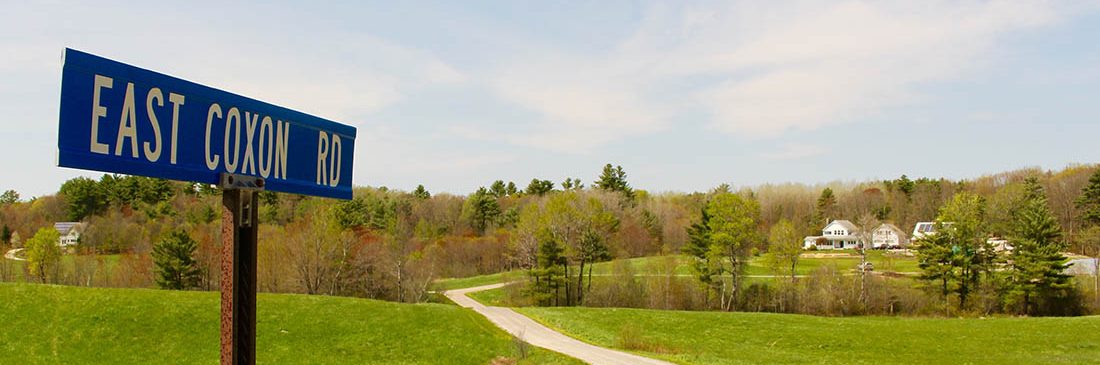
Scatter Good Farm is located in western Brunswick, Maine, about as far from the coastline as you can be and still be in Brunswick. Downtown Brunswick, Lisbon Falls, and Freeport are about 10 minutes away, and Portland, Wiscasset, and Lewiston/Auburn are about 30 minutes away. Going up the coast, it’s about 75 minutes to the Campden Hills area.
For directions to Scatter Good Farm, please click here.
Our Team
 John Newlin, co-owner/manager
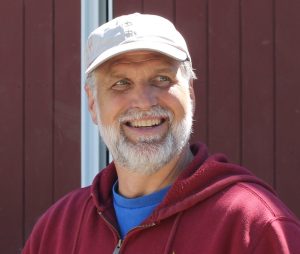
John is a retired educator and nonprofit director. He worked as a public high school teacher for 13 years, and as a leader of professional development for teachers and principals for another 17 years. That work ended in 2013 when he shifted his attention to the climate change issue. Since then, he has focused primarily on climate education, and climate-friendly farming and forestry practices. He co-founded the nonprofit Growing to Give in 2017. John strives to infuse his work (and play) with an entrepreneurial and collaborative spirit. For fun and relaxation, he enjoys walking in the woods, good TV, dancing, prayer songs, and yoga.
FMI: please visit https://www.linkedin.com/in/johnbnewlin.
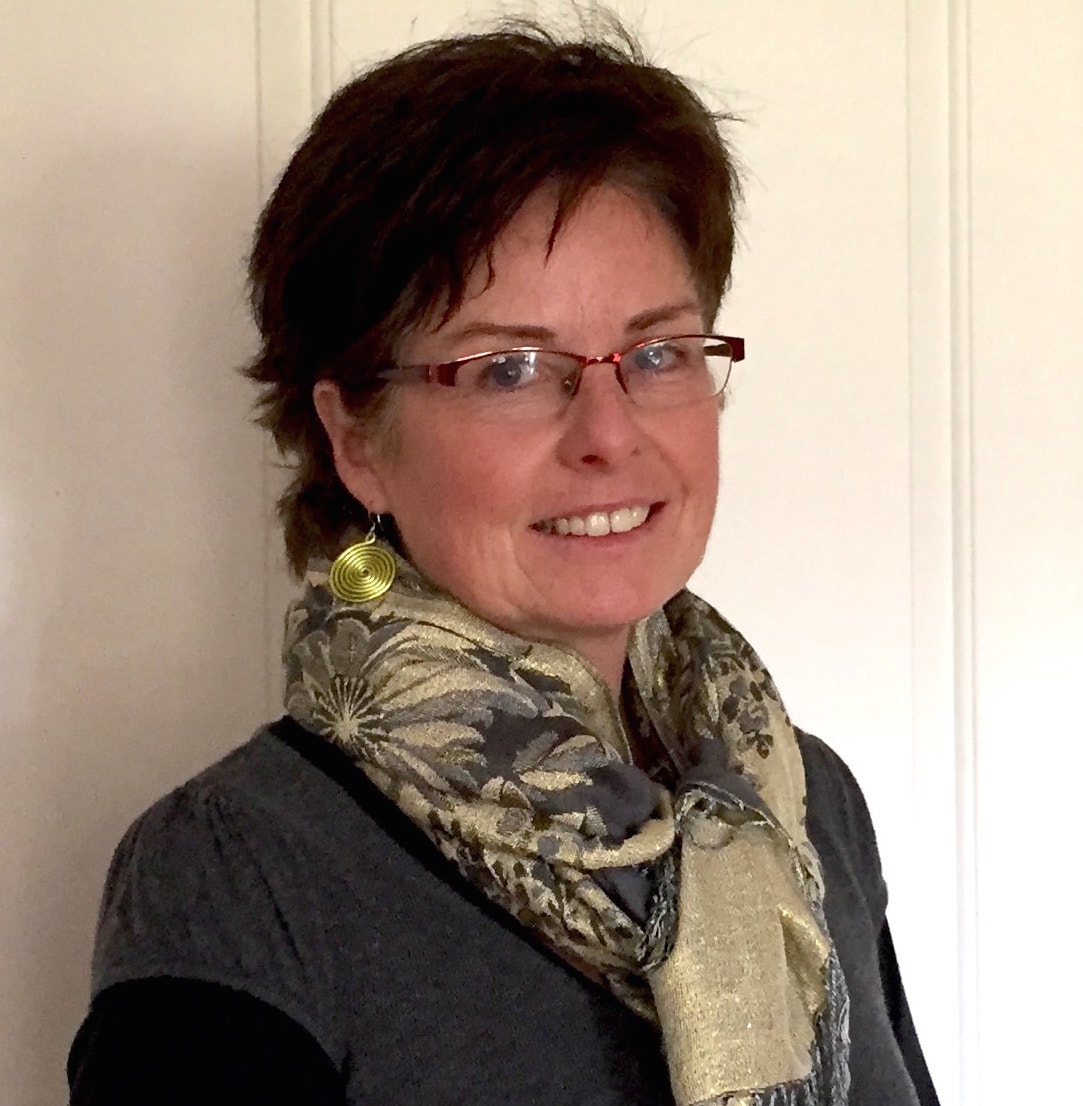 Patty Carton, co-owner/manager
Patty started her career as a pediatric physical therapist, and early on she combined her love of horses with her skills as a therapist, starting a nonprofit in 1993 for people with disabilities called Riding to The Top (RTT) Therapeutic Riding Center, which is now located in Windham, Maine. Since then, she has worked at RTT as the executive director, volunteer coordinator, program director, board member, and riding instructor. Patty has also worked a massage therapist, and has run a fiber summer camp for children at Scatter Good Farm, teaching animal husbandry, sheep wool processing, spinning, knitting and crocheting. Most recently, she has begun a new career tutoring dyslexic children in reading skills, while continuing to host farm-stay guests at Scatter Good Farm. In addition, she has served as a coordinator for numerous nonprofit fundraising and community-building events. For fun and relaxation, Patty enjoys cross country skiing, kayaking, singing, campfires, board games, and spending time with family and friends.